

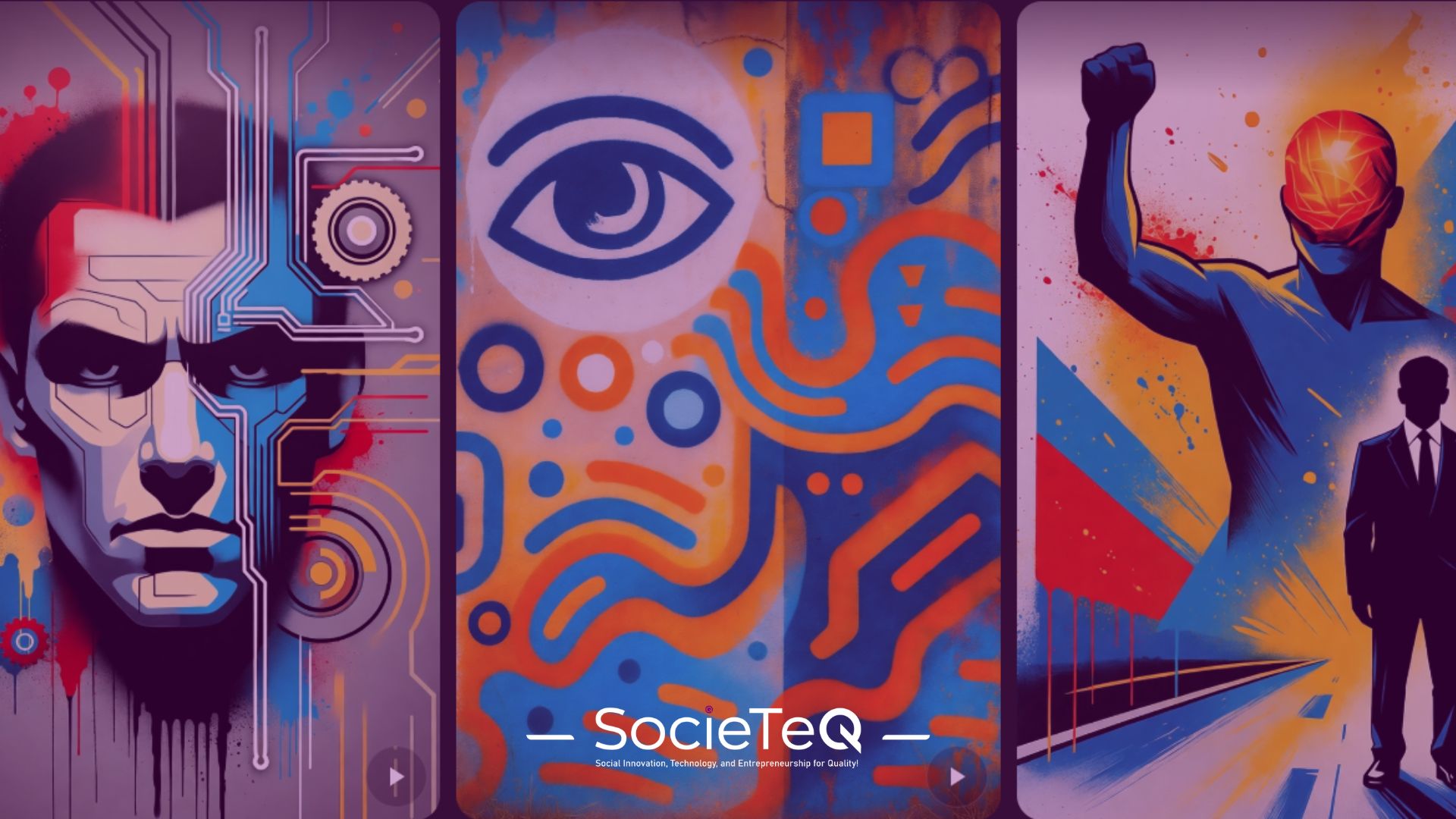
The rapid evolution of Artificial Intelligence (AI) Artificial Intelligence (AI) is no longer a science fiction scenario, but the most pressing current event fundamentally reshaping the world of work. Recent reports from the World Economic Forum (WEF) highlight a dual challenge: the radical transformation of jobs and the concurrent, often invisible psychosocial impact on the worker.
The Dynamics of Transformation and Uncertainty
According to the World Economic Forum’s "Future of Jobs Report 2025", “Future of Jobs Report 2025” automation and AI are expected to displace approximately 92 million jobs globally, primarily in repetitive, predictable tasks. Simultaneously, however, the same trends will create an estimated 170 million new roles,, οδηγώντας σε μια καθαρή αύξηση της απασχόλησης κατά 78 εκατομμύρια θέσεις World Economic Forum – The Future of Jobs Report 2025.
The key to capitalizing on this shift lies in reskilling and adaptation. Nevertheless, this uncertainty is generating a new wave of job anxiety and professional burnout among employees.
Mental Health as Social Innovation
Reports from European organizations, such as EU-OSHA, indicate that digital technologies and algorithmic management, in the absence of proper measures, can lead to work intensification,, blurred boundaries between personal and professional life, and an increase in psychosocial risks Socialpolicy.gr – Επανάσταση στην υγεία και την ασφάλεια: ο ρόλος της τεχνητής νοημοσύνης.
The fear that AI will take our jobs is a genuine concern affecting our mental well-being Θάλπος – Τεχνητή Νοημοσύνη (ΤΝ) και Αβεβαιότητα: Ο Φόβος Ανεργίας στην Εποχή της ΑυτοματοποίησηςThe answer is not in denying technology, but in integrating mental health care as a core component of business innovation.
Our Philosophy
In this environment, organizations like SocieTeQwith their focus on Social Innovation, Technology, and Healthy Business,are called to play a crucial role. SocieTeQ's vision to provide tools and learning programs to support individuals and organizations pursuing positive change is the ideal response to today’s challenge.
The successful integration of AI, as highlighted in studies by the Greek Institute for Occupational Health and Safety (ELINYAE), requires a holistic approach,, based on meaningful employee participation, clear rules, and continuous skills enhancement ΕΛ.ΙΝ.Υ.Α.Ε. – ΥΓΕΙΑ & ΑΣΦΑΛΕΙΑ ΣΤΗΝ ΕΡΓΑΣΙΑ.
AI did not come to erase us; it came to change us. Our role is to ensure that this change leads to a human-centric work culture, where mental health is a right, and not a privilege.