

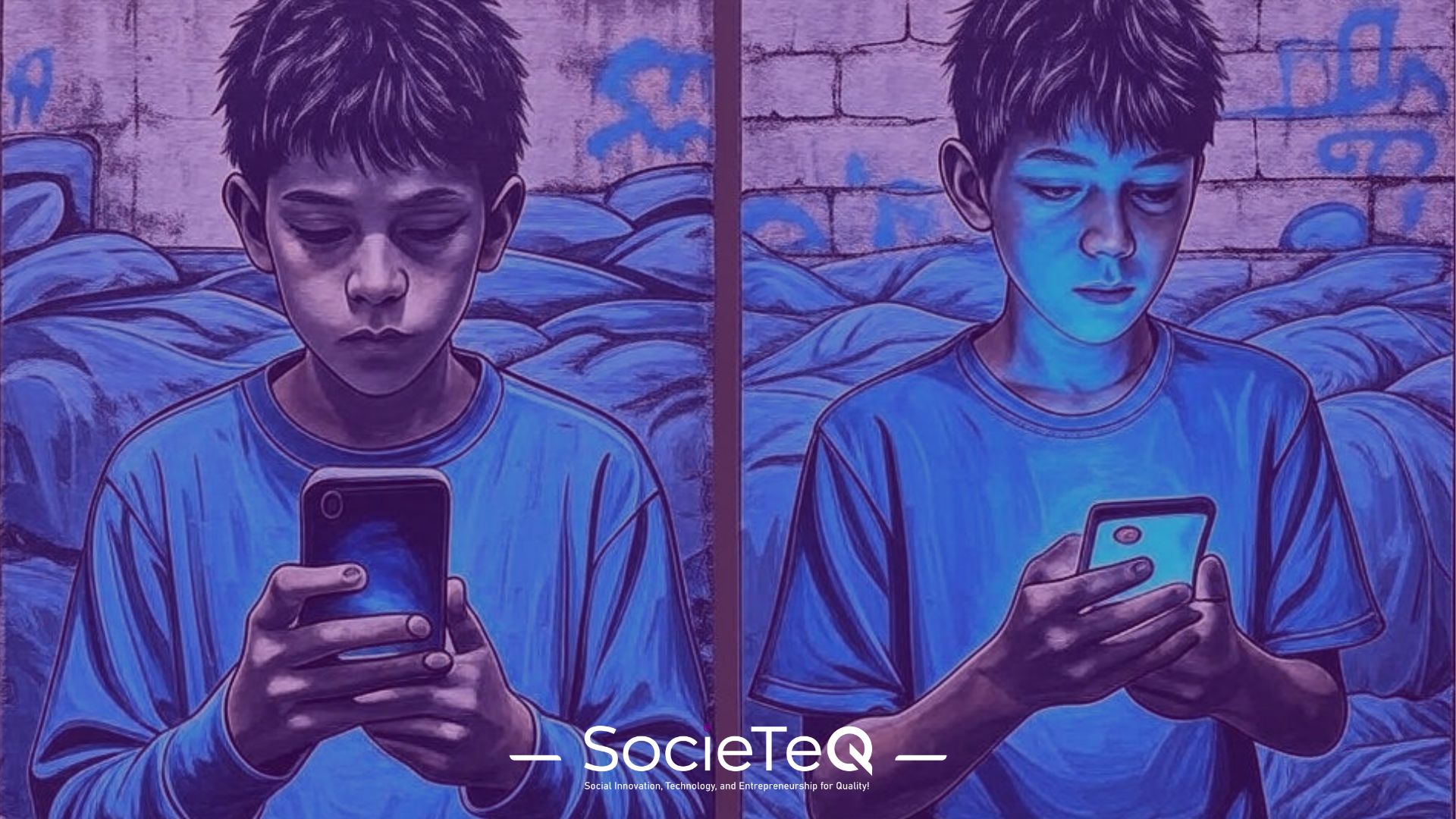
The relationship between teenagers and digital screens has become one of today’s most pressing social concerns. According to the World Health Organization (WHO Europe, 2024),around 11% of adolescents in Europe show signs of problematic social media use, while 12% are at risk of excessive gaming.These behaviors are linked to reduced concentration, sleep disorders, and heightened anxiety (WHO Europe)WHO Europe).
Schools are not immune to the problem. A recent study by the European Commission (ICILS 2023) , revealed that 43% of 14-year-olds in the EU lack basic digital skills, limiting not only their ability to critically use technology but also their opportunities to channel screen time into creative or educational activities (European Commission, 2023).European Commission, 2023).
The impact on mental health is equally concerning. Data published in JAMA Network Open (2024)shows that nearly 1 in 4 adolescents aged 11–15 report psychological distress, including sleep difficulties and anxietyJAMA Network OpenFurther research cited by The Guardian The Guardian suggests that teenagers engaged in “addictive screen use” are 2–3 times more likely to develop suicidal thoughts or emotional difficulties (The Guardian, 2025 ).The Guardian, 2025).
The debate is no longer about whether teenagers should use screens — but rather how they use them. How can society help adolescents build self-regulation skills? How can parents and teachers be better equipped to guide them? And how can technology shift from being a source of pressure to a tool for creativity, learning, and empowerment?
The challenge is substantial, but so is the opportunity: to reshape digital life not as an enemy but as a field where, with the right education and support, the next generation can find balance, resilience, and inspiration.