

By Nikos Lekkos - Primary Education School Counselor
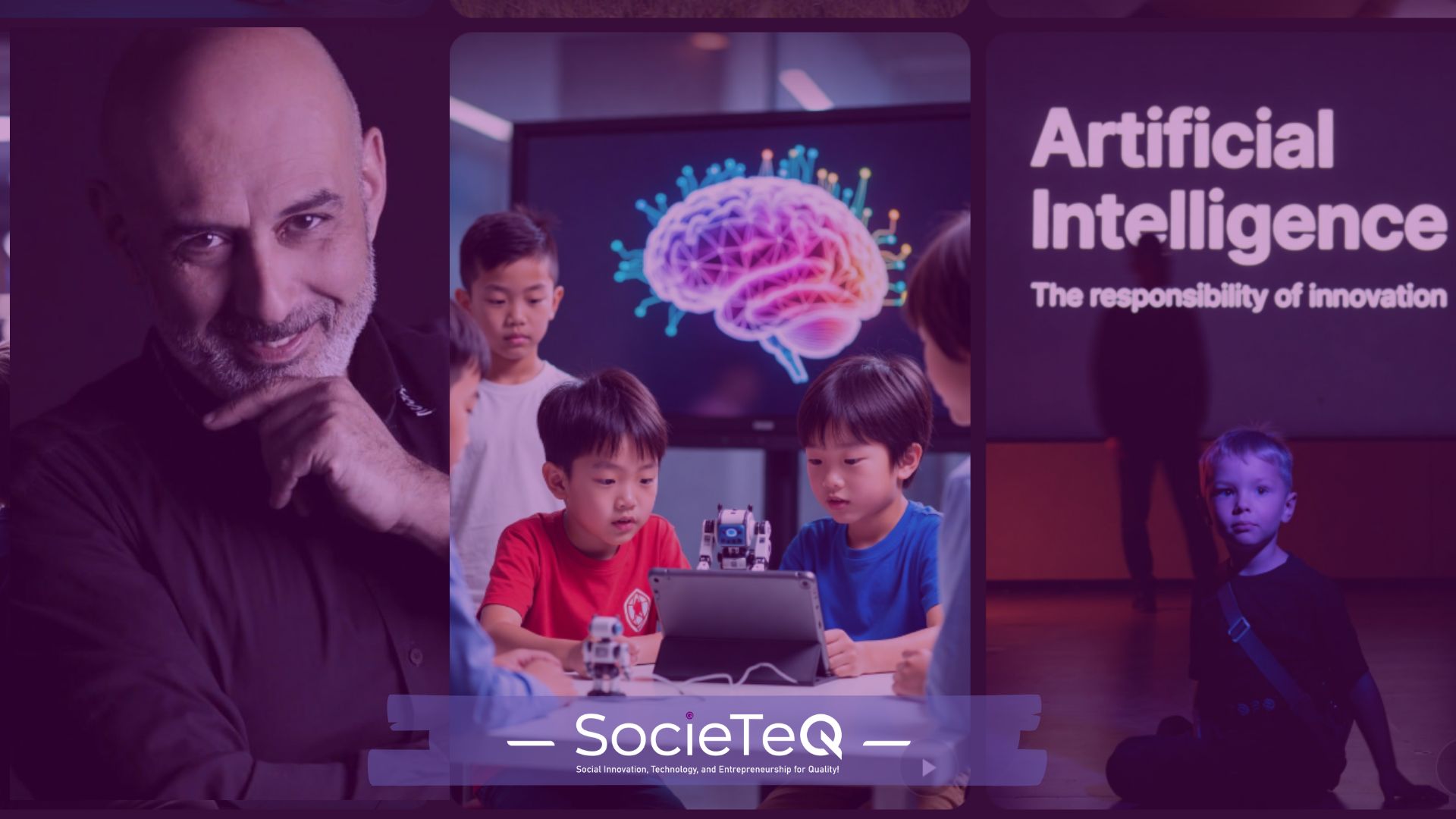
Artificial Intelligence (AI) has permeated many areas of human activity—and education could not be an exception. Children of all ages now engage with AI, from simple educational applications to systems that support personalized learning. AI has become a significant tool in children’s hands, transforming the way they learn, play, and interact with the world around them. This change is so rapid that even the most specialized scientists are often surprised and concerned about its evolution. At the same time, the ease of access and simplicity of use make AI highly attractive, often leading to uses whose long-term consequences are not yet visible. (Holmes, Bialik, & Fadel, 2019; OECD, 2021)
Every new development brings change. And like any change, it generates enthusiasm on one side and fear or resistance on the other. In human history, nothing has ever been simply “black or white” or “good or bad.” This binary interpretation cannot be used to approach AI either. It is essential to understand both the benefits and the potential risks that arise from it.
Positive Aspects
- Personalized Learning:: AI can adapt educational material to each student’s needs and learning pace, creating conditions for better understanding and improved performance across subjects. (Luckin, 2018; Holmes et al., 2019)
- Development of Critical κand Research Skills: Many AI applications encourage critical thinking, analysis, synthesis of information, and dialectical approaches, helping children explore new ideas and methods for solving or interpreting problems. (Redecker, 2017; Voogt & Roblin, 2012)
- Cultivation and Strengthening of Digital Skills:: Η επαφή με τεχνολογίες ΤΝ διδάσκει στα παιδιά πώς να χειρίζονται ψηφιακά εργαλεία και προετοιμάζει την επόμενη γενιά για μια ψηφιακά κυρίαρχη εργασιακή αγορά. (Redecker, 2017).
Negative Aspects
- Excessive Dependence:Continuous use of AI may lead children to rely too heavily on technological solutions for problem-solving, reducing their ability to think independently. Research, comparison, synthesis, and drawing conclusions are often handled by AI, while the child becomes a simple user. (Livingstone & Third, 2017)
- Reduced Human Interaction:Increased AI use in education may limit human interactions, which are crucial for developing social skills and empathy. Friends, peers, or significant adults may be replaced by AI systems that adapt to a child’s “wants,” isolating them from meaningful socialization essential for their development. (UNICEF, 2021)
- Safety and Privacy:AI use is often associated with risks concerning children’s data privacy and security. Active and meaningful parental supervision is essential. Children are already exposed to the environments of social media, developing life attitudes that do not match their age and adopting role models far from reality. (Floridi et al., 2018; European Commission, 2022)
AI should neither be demonized nor idealized. It is neither the solution to all problems nor their source. It is not just a mobile app or a passing trend. It is a technology capable of advancing many fields of science and everyday life. It is vital to balance technological integration with the development of well-rounded individuals—emotionally and socially healthy. Awareness and education of parents and teachers are key to safely and constructively integrating AI into children’s lives.
Βιβλιογραφία/Πηγές:
- Holmes, W., Bialik, M., & Fadel, C. (2019). Artificial intelligence in education: Promises and implications for teaching and learning. Center for Curriculum Redesign.
- (2021). Artificial intelligence in education: Challenges and opportunities for sustainable development. OECD Publishing.
- Luckin, R. (2018). Machine learning and human intelligence: The future of education for the 21st century. UCL Institute of Education Press.
- Redecker, C. (2017). European framework for the digital competence of educators: DigCompEdu. European Commission.
- Voogt, J., & Roblin, N. P. (2012). A comparative analysis of international frameworks for 21st century competences. Journal of Curriculum Studies, 44(3), 299–321.
- Livingstone, S., & Third, A. (2017). Children and young people’s rights in the digital age: An emerging agenda. New Media & Society, 19(5), 657–670.
- (2021). Policy guidance on AI for children. UNICEF Office of Global Insight and Policy.
- Floridi, L., et al. (2018). AI4People—An ethical framework for a good AI society. Minds and Machines, 28, 689–707.
- European Commission. (2022). Ethics guidelines for trustworthy artificial intelligence.